Bars are cheaper per gram, coins easier to sell. Which denomination carries the smallest premium, which mintages are recognised worldwide and why 100 grams are often the best compromise.
In short
- Premium over the gold price: 1 gram around 15 percent, 1 ounce around 3, 100 grams around 2, 1 kilo around 1.
- Coins: Krugerrand, Maple Leaf, Vienna Philharmonic, Britannia, American Eagle trade everywhere.
- Bars only from LBMA-certified refiners with stamp, serial number and certificate.
- Investment gold is VAT-free in the EU, silver is not.
The premium is the criterion
Gold costs a price per ounce on the exchange. Dealers sell above it, buy below it, and the spread between the two is your loss on day one. It depends on the denomination: a 1-gram bar costs 12 to 18 percent over spot, an ounce around 3 percent, 100 grams 1.5 to 2.5 percent, a kilo under one percent. Whoever buys small pieces pays for minting and packaging that nobody refunds on sale.
Bars
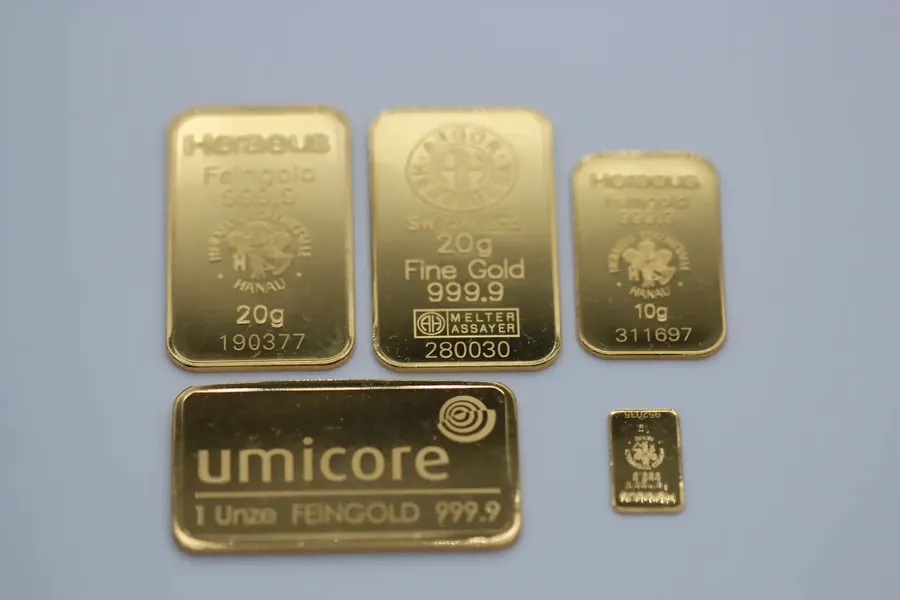
Bars come from 1 gram to 12.5 kilos. Buy only from refiners on the Good Delivery list of the London Bullion Market Association, such as Heraeus, Umicore, Valcambi, Argor-Heraeus, Degussa or PAMP. The bar carries refiner, fineness 999.9, weight and serial number, often in a blister with certificate. A bar in an intact blister is accepted on sale without testing, which narrows the spread. From 100 grams bars are the cheapest form.
Coins
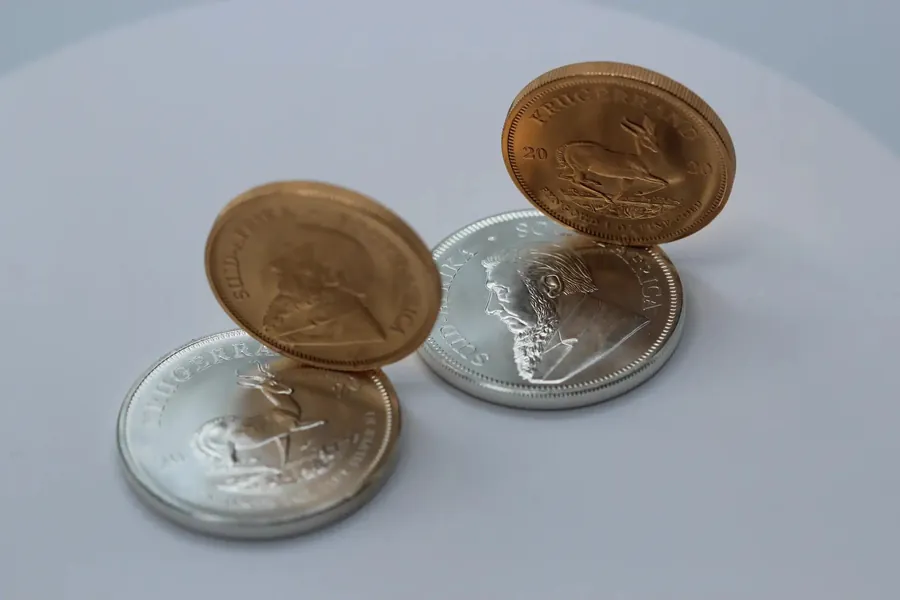
Bullion coins such as the Krugerrand, Maple Leaf, Vienna Philharmonic, Britannia, American Eagle, Kangaroo and, since 2024, the gold euro are minted in huge runs and traded worldwide. The premium sits between 2.5 and 4 percent for an ounce, 5 to 6 for a half ounce, over 10 percent for a tenth. Advantage: every bank and dealer knows them, there is no certificate question, and you can sell in small pieces. Historic coins such as the Vreneli, Sovereign or 20-mark pieces trade at gold value, sometimes with a collector premium.
The mix
Whoever invests €10,000 does best with a 100-gram bar and an ounce. Whoever invests €50,000 takes 250 or 500-gram bars plus a few ounces for flexible selling. Denominations smaller than a quarter ounce only make sense as gifts. The kilo bar is the cheapest but can only be sold whole and is often tested on purchase.
Where to buy
From precious metal dealers with a shop or established online dealers whose prices you check on comparison portals. For cash purchases above €2,000 German anti-money-laundering law requires ID, above €10,000 always. Banks sell too, usually dearer. Stay away from offers below spot, from classified ads and from bars without a refiner stamp.
Tax
Investment gold with a fineness from 995 and coins from 900 are exempt from VAT in the EU. The sale is tax-free after one year of holding; before that a threshold of €1,000 of gain a year applies. Silver, platinum and palladium carry 19 percent VAT and are therefore at a disadvantage as investments.
Try it yourself
Gold CalculatorWeight, fineness, gold price: the material value of jewellery, bars and coins, also as a buying range.Gold Investment PlannerLump sum or savings plan, term, scenario: how much gold you get and what it could be worth.Frequently asked questions
Are combibars sensible?
The snap-off 1-gram tablets carry a premium of around 10 percent. For investors ounce coins are better; tablets are an emergency thought, not an investment.
How do I spot fakes?
Wrong dimensions or weight, missing stamp, magnetism, ring test. Certified dealers have testing devices; tungsten cores are an issue with kilo bars, practically never with ounce coins.
Should I hold gold in small pieces for a crisis?
A few ounces and quarter ounces are enough. Crises are rarely such that you pay with gold; you sell to dealers, and they take every denomination.
Share