
Gold has more than doubled since 2019. What moves the price, why interest rates and the dollar matter more than inflation, how central banks changed the market and how much gold belongs in a portfolio.
In short
- Price formation: real interest rates, the dollar, central bank buying, crises and jewellery demand from India and China.
- Gold pays no interest, so it falls when safe real rates rise and rises when they fall.
- Central banks have bought more than 1,000 tonnes a year since 2022 and changed the market structurally.
- Five to ten percent of the portfolio is the usual recommendation: insurance, not a return engine.
Who buys gold
Annual demand of around 4,500 tonnes splits into jewellery (about 45 percent, above all India and China), investors in bars, coins and ETFs (about 25 percent), central banks (more than 20 percent since 2022) and industry (around 7 percent). Supply comes from mines (around 3,600 tonnes) and recycling. Because almost all gold ever mined still exists, the price is less a question of production than of who is willing to part with their gold at what price.
Interest rates and the dollar
Gold pays no interest. When the real rate on safe government bonds rises, gold becomes relatively unattractive and falls; when it falls, gold rises. The link was almost textbook from 2000 to 2021. Add the dollar: gold trades in dollars, a strong dollar makes it dearer for buyers in other currencies and weighs on the price. For euro investors the euro gold price counts, which goes its own way via the exchange rate.
The new role of central banks
Since the freezing of Russian reserves in 2022, central banks, above all China, Poland, India, Turkey and the Gulf states, buy more than 1,000 tonnes a year. They want reserves no other state can block. These purchases have loosened the classic link with real rates: gold rose from 2023 to 2025 despite high rates. Whether that continues decides the price of the coming years more than any inflation forecast.
Inflation and crises
Gold is not a reliable short-term inflation hedge; in 2022 inflation hit eight percent and gold fell in dollars. Over decades it keeps its purchasing power. In crises it is liquidity that is always wanted: in stock crashes gold mostly rose or fell far less. That is why it belongs in a portfolio: not as a growth engine but as a stabiliser that moves differently from stocks.
How much gold
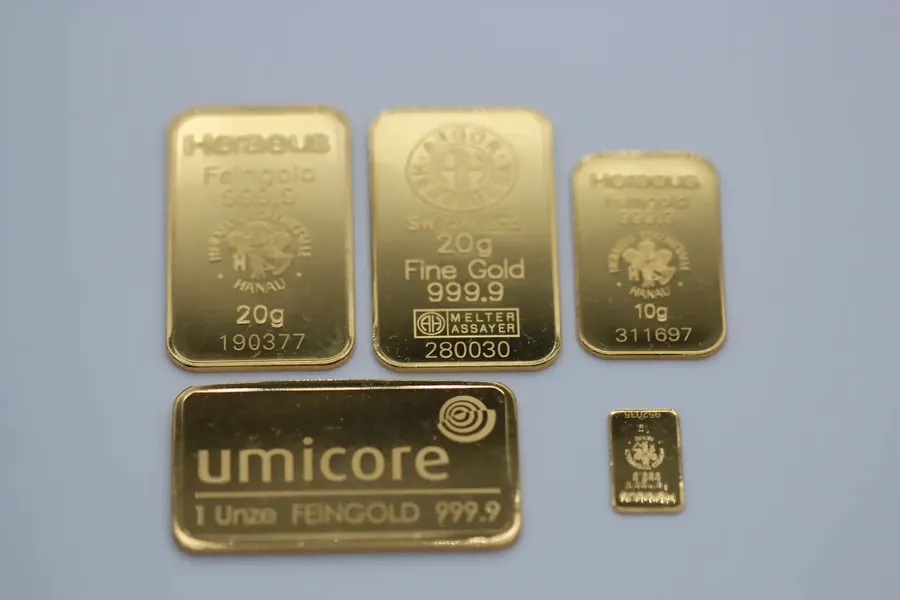
Most wealth managers recommend five to ten percent of liquid assets. At €100,000 that is €5,000 to €10,000, so two to four ounces. More becomes a bet on gold, less has no effect. It is best bought in tranches over a year, because nobody knows the low, and held for decades.
Physical or paper
Physical gold costs a premium and storage but belongs to you. ETCs with physical backing such as Xetra-Gold or Euwax Gold are cheap and tax-free after one year in Germany if they carry a delivery entitlement. Gold mining shares are shares, not a gold investment, with three times the swings. For the stabiliser in the portfolio, physical or ETC is the right choice.
Try it yourself
Gold CalculatorWeight, fineness, gold price: the material value of jewellery, bars and coins, also as a buying range.Gold Investment PlannerLump sum or savings plan, term, scenario: how much gold you get and what it could be worth.Frequently asked questions
Where does the gold price stand in 2026?
In early September 2026 around €2,700 an ounce, after a rise of more than 80 percent since 2023. The calculator uses a reference value you can adjust yourself.
Is gold too expensive now?
Measured against earlier highs yes, measured against money supply and central bank demand not necessarily. Whoever asks the question buys in tranches and does not argue with the market.
What is better: gold or bitcoin?
Gold has 5,000 years of history and swings around 15 percent a year, bitcoin 15 years and around 60 percent. Both can coexist, but gold is the stabiliser, bitcoin the bet.
Share