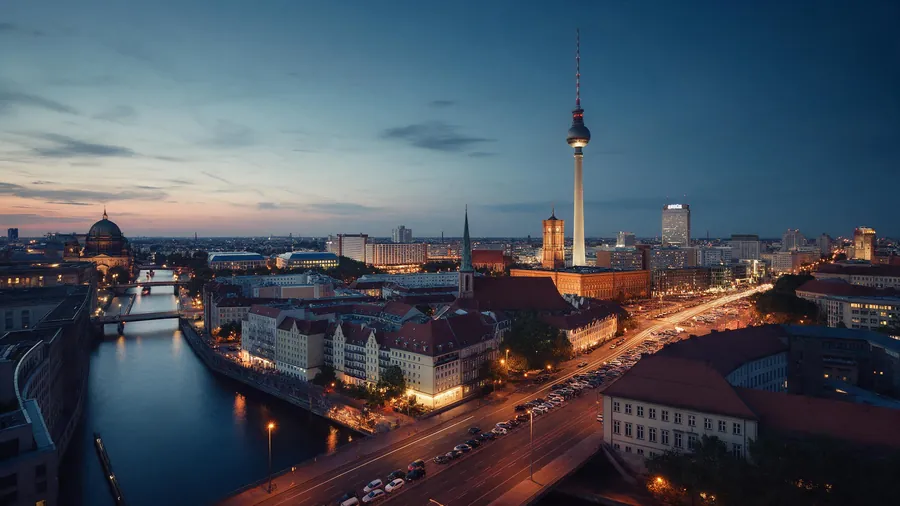

Berlin has tripled its prices in ten years and still earns below the national average. Purchasing power sits at 96, rents at €15 for new contracts while existing tenants often pay under €8. A market with two speeds.
Buy or rent?
28.3 years of rentpurchase price divided by annual cold rentBetween 25 and 30 it is balanced: buying pays off with a long horizon and equity.
milinia’s take
- New lettings €15, existing rents €7.50 on average: whoever has an old flat keeps it.
- Purchase prices €5,100 per square metre, Prenzlauer Berg and Mitte over €7,000, Marzahn and Spandau around €3,500.
- Transfer tax 6 percent, trade tax multiplier of 410 percent low for a metropolis.
- Salaries in technology and start-ups at Munich level, in administration and services below the national average.
Living
Existing flats cost €5,100 per square metre, in Mitte, Prenzlauer Berg and Charlottenburg over €7,000, in Marzahn, Spandau and Reinickendorf around €3,500. The rise from €2,000 to €5,500 between 2013 and 2022 was the strongest in Germany, the correction since around 10 percent. The rental market is split: new lettings cost €15 excluding utilities, often €20 in sought-after locations, while existing stock sits at €7.50 under the rent index. The rent brake applies until 2029 but is circumvented with furnished and fixed-term lets. Flat hunting takes months.
Earning
Median €4,300 gross, considerably more in technology, start-ups and consulting, less in administration, hospitality and culture. Purchasing power index 96, below the national average. Berlin has the highest share of self-employed and the largest low-wage sector among the metropolises; the median hides a wide spread.
Taxes and levies
Transfer tax 6 percent. The trade tax multiplier of 410 percent is the lowest among the metropolises and one reason for the start-up density. Property tax multiplier after the reform 470 percent. Church tax 9 percent, but the lowest church membership in Germany.
Investing
The gross yield sits at 3.5 percent, in outer districts at 4.5. Berlin remains the market with the greatest catch-up potential because prices, despite tripling, sit below Hamburg and Frankfurt and the city grows by 40,000 people a year while construction stalls. Risks: political interventions such as the overturned rent cap of 2021, the expropriation debate and the rent brake. Whoever invests picks Lichtenberg, southern Neukölln, northern Pankow and Spandau with the link to the new Siemensstadt quarter.
milinia’s view
Berlin is the city where existing tenants are rich and newcomers are poor. Whoever has an old flat should keep it and invest. Whoever arrives new reckons with Munich rents on Bremen salaries.
Try it yourself
Mortgage CalculatorPrice, federal state, equity, rate and repayment: monthly payment, closing costs and remaining debt after the fixed-rate period.Gross to Net Calculator 2026Tax class, children, church tax, health insurer surcharge: what is left of your German gross salary, monthly and per year.Share