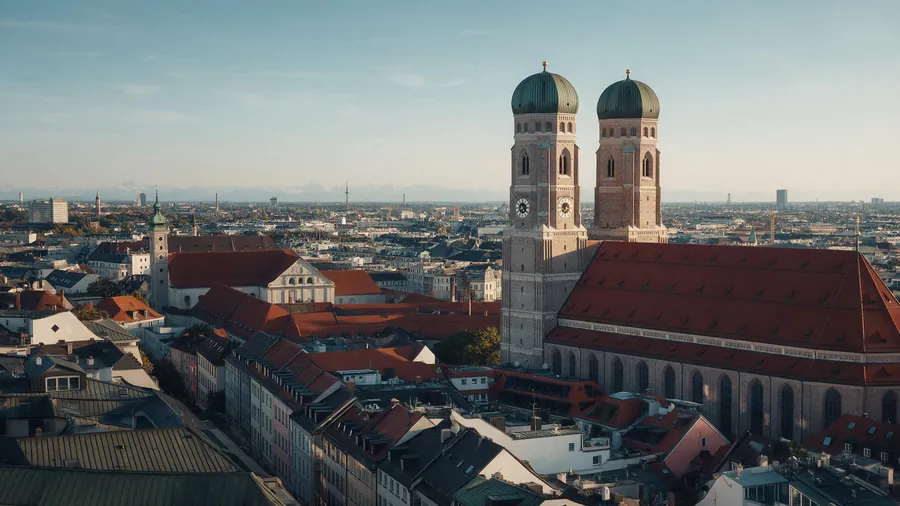

Munich is Germany’s most expensive city with the highest salaries, the lowest transfer tax and a rental yield below the mortgage rate. Whoever buys here buys security, not income.
Buy or rent?
32.9 years of rentpurchase price divided by annual cold rentAbove 30 the ratio favours renting and investing the difference, unless your horizon is very long.
milinia’s take
- Buy only with a horizon above 15 years; the price-to-rent ratio of 33 favours renting.
- Transfer tax of 3.5 percent is the only cost advantage of buying in Bavaria.
- Suburbs on the S-Bahn: Dachau, Erding and Freising offer 30 percent lower prices at 30 minutes of travel.
- Negotiate salary with Munich benchmarks: 15 to 20 percent above the national average is normal.
Living
Existing flats cost around €8,300 per square metre in 2026, in Schwabing, Bogenhausen and the old town over €11,000, in Neuperlach and Milbertshofen around €6,500. After the decline of around 15 percent from 2022 to 2024, prices have been rising slightly again since 2025. New lettings sit at €21 per square metre excluding utilities; a three-room flat of 80 square metres costs €1,700. The gross rental yield of 3 percent sits below the mortgage rate; investors here bet on appreciation, not income. The price-to-rent ratio of around 33 is the highest in Germany.
Earning
The full-time median is €5,300 gross, considerably more in technology, automotive, insurance and consulting. The purchasing power index of 128 is the top figure, but after housing costs less remains net than in Nuremberg or Leipzig. Whoever moves to Munich from another city should ask for 20 percent more salary, otherwise it is a step down.
Taxes and levies
Bavaria has the lowest transfer tax at 3.5 percent, which saves €18,000 versus North Rhine-Westphalia when buying a flat for €600,000. The trade tax multiplier of 490 percent is high, the property tax multiplier after the reform 824 percent, though Bavaria’s area-based model produces lower base amounts. Church tax 8 percent.
Investing
Munich remains Germany’s safest property market with appreciation of around 5 percent a year over 20 years. Sensible for investors with high equity and a long horizon, not for those focused on yield. The suburbs along the S-Bahn offer 4 percent yields at 30 percent lower prices. Alternatives to property are particularly sensible here: whoever puts the difference between rent and mortgage payment into an ETF often has more after 20 years.
milinia’s view
Munich pays for earners, not for investors. Whoever earns above €6,000 here saves more than anywhere else. Whoever lives here on €4,000 saves less than in Leipzig on €3,000.
Try it yourself
Mortgage CalculatorPrice, federal state, equity, rate and repayment: monthly payment, closing costs and remaining debt after the fixed-rate period.Gross to Net Calculator 2026Tax class, children, church tax, health insurer surcharge: what is left of your German gross salary, monthly and per year.Share