A used yacht has the biggest loss of value behind it and is available straight away. To keep it from becoming an expensive project, you need an independent survey, clean papers and a contract that governs the handover. The process step by step.
In short
- New yachts lose around 20 percent in the first year, then 5 to 10 percent a year; buying used skips the steepest part.
- An independent surveyor checks hull, keel, rudder, rig, engine, electrics and moisture ashore, followed by a sea trial.
- Broker commission: typically 10 percent of the purchase price, usually paid by the seller.
- Papers: proof of ownership, freedom from liens, proof of VAT and CE conformity.
Why used
According to market observations, new yachts lose around 20 percent of their value in the first year, then 5 to 10 percent a year with good care, and production boats lose hardly anything after ten to fifteen years. A well-kept used yacht is therefore usually the financially smarter choice, and it is ready straight away instead of after months of delivery time. The price for this is uncertainty: what a boat has been through is not always visible.
The search and the broker
Used yachts are sold privately, through dealers and through yacht brokers. The broker is usually instructed and paid by the seller; the commission is typically 10 percent of the purchase price, and a buyer’s broker usually shares the seller’s broker’s commission. A good broker knows prices and papers, organises viewing, survey and sea trial and accompanies the handover. But do not forget who they work for: you commission the survey yourself.
The survey
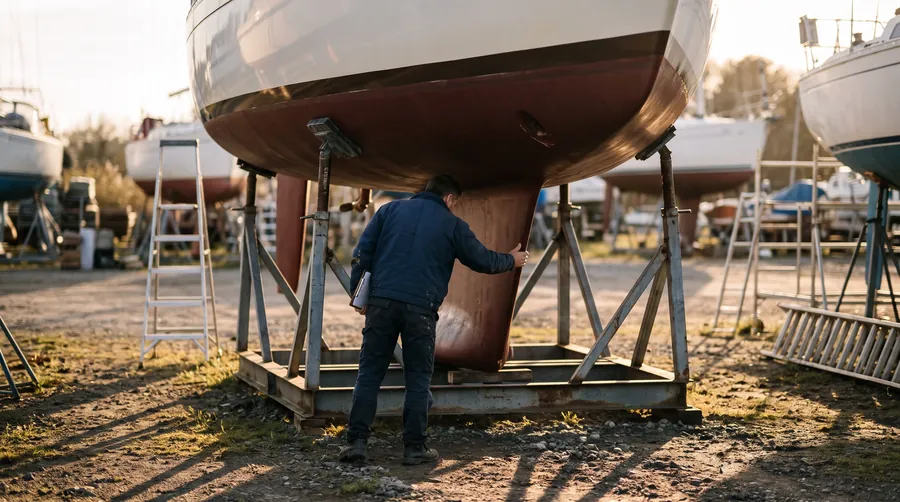
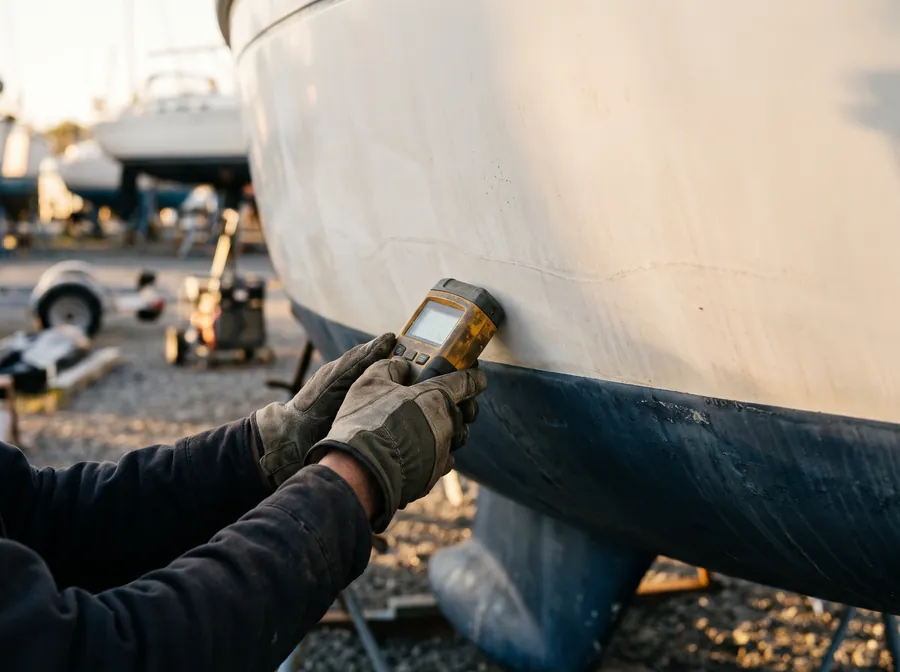
Before the purchase the yacht belongs ashore and in the hands of an independent surveyor whom you choose and pay. They check the hull for damage and, on fibreglass boats, for moisture and osmosis, plus keel attachment, rudder and seacocks, standing and running rigging, engine, drive and electrics, gas system and safety equipment. A sea trial under engine and, on sailing yachts, under sail follows. The buyer usually pays for lifting and survey, even if they do not buy in the end. The result is both the basis for negotiating the price and the basis for insurance.

The papers
Four proofs decide a clean purchase. First, ownership: purchase invoices, register extract, flag certificate or International Boat Certificate, and the seller must be the owner. Second, freedom from liens: for registered ships the register extract shows ship mortgages; for financed boats with transfer of ownership as security, the bank remains the owner until the loan is repaid. Third, VAT: the original invoice showing the tax or an import document, more on this in our article on tax and flag. Fourth, conformity: recreational craft of 2.5 to 24 metres hull length placed on the market in the EU need the CE marking and a declaration of conformity under the Recreational Craft Directive.
The design category
The CE marking comes with the design category the boat is built for. Category A is designed for winds above force 8 and waves above four metres, B for winds up to force 8 and waves up to four metres, C for winds up to force 6 and waves up to two metres, D for winds up to force 4 and waves up to 0.3 metres. Whoever plans ocean passages needs a different yacht from someone cruising lakes and coastal waters. This is no formality: the category says something about safety, cruising area and therefore also about the circle of future buyers.
Contract and handover
The purchase contract names the yacht, equipment and inventory with a list, purchase price, deposit, place and date of handover, plus the assurances on ownership, freedom from liens and tax status. In private sales, warranty is usually excluded. All the more important are a survey clause, meaning the right to withdraw or renegotiate after the survey, and a secure payment, for example via an escrow account. At handover, keys, original papers and a receipt change hands; insurance and berth should run in your name from that day.
The typical pitfalls
A low price without proof of VAT. A freshly polished hull over old moisture damage. A rig without records of its age. An engine without a service history. A seller who is not the owner, or a yacht that still belongs to the bank. And your own enthusiasm forgetting the berth: before buying, clarify where the yacht can lie next summer. On the Baltic, more than two thirds of the harbours surveyed in Schleswig-Holstein reported no free seasonal berth in 2026.
Frequently asked questions
Who pays the broker’s commission when buying a yacht?
As a rule the seller. Typically it is 10 percent of the purchase price; a broker on the buyer’s side usually shares this commission.
Does a used yacht need a CE marking?
Recreational craft of 2.5 to 24 metres hull length placed on the market in the EU need the CE marking under the Recreational Craft Directive. Whoever imports a yacht from outside the EU has to clarify conformity separately.
Is a survey worth it for smaller boats too?
Yes, as soon as the purchase price reaches a sum you would not want to lose. Moisture or engine damage can cost a large part of the purchase price, the survey only a fraction of it.
Share