Boat sales are weak worldwide, and Werft 52 on Lake Constance is betting on the refit. What renewing a yacht means financially compared with buying new, why a survey comes first and why winter storage is the best time for the work.
In short
- A refit renews a yacht according to its owner’s wishes, from a partial renovation, say of the electrics only, to a complete overhaul.
- According to market observations, new yachts lose around 20 percent of their value in the first year; at €180,000 that would be around €36,000. A refit goes into a boat that has already left this part of the value curve behind.
- A survey comes first: a pre-purchase and valuation survey or a damage survey, at Werft 52 by the technical boat surveyor André Vrecer, with valuations following the DESAG guidelines.
- Winter storage is the natural time for the work: more than 185 boats are in winter storage at Werft 52, and the yard’s own boatbuilder and boat painter work on site.
At a glance
- House
- Werft 52 AG
- Sites
- Romanshorn (motorboats), Kreuzlingen (sailing boats)
- On the Swiss shore of Lake Constance
- for over 40 years
- Refit projects
- over 15
- Restorations
- over 8
- Materials
- steel, GRP, wood
- Winter storage
- over 185 boats
- Surveys
- pre-purchase, valuation, damage
Anyone thinking about a new yacht should not write off the one they already have too soon. André Vrecer, owner of Werft 52 AG on the Swiss shore of Lake Constance, sees boat sales as weak worldwide and is therefore betting on the refit, the renewal of an existing boat. He compares the work to restoring a classic car: “You bring in a broken boat that only just floats and runs, and we turn it into a new one.” For owners this is not only a matter of loving their own boat. It is also a calculation, and one worth setting out properly.
What a refit is
A refit is “the renovation of a yacht entirely according to its owner’s wishes”, as Werft 52 puts it on its page on restoration and conversions. That can be a partial renovation that only concerns the electrics, for example, or a complete overhaul. Almost anything is possible, the yard says, from a technical upgrade to aesthetic refinement. The reasons owners come with are often very specific. The yacht is too slow or cannot make headway against current, waves and wind. The controls are outdated, the freshwater pump or the toilet is too loud, the canopy is a struggle to close. The fenders get in the way when stowed, the steps to the aft deck are uncomfortable, the bathing platform is too narrow or has no door. For cases like these, the yard says, there is a suitable solution.
The calculation: depreciation versus renewal
The financial core of a refit is depreciation. According to market observations that milinia has gathered in its article on the running costs of a yacht, new yachts lose around 20 percent of their value in the first year. After that it is 5 to 10 percent a year with good care, and series-built boats hardly lose any value after ten to fifteen years. For a new boat at the price of the example yacht in that article, €180,000, that would be around €36,000 in the first year. That money is gone without the boat being able to do anything better for it. Anyone who has an existing boat renewed instead puts the money into a vessel that has already left the steepest part of the value curve behind, and into things they notice on board every day.
What a refit costs, on the other hand, cannot be stated across the board. It depends on the condition, the material and the scope of the work, and it can only be priced seriously once someone has seen the boat ashore. milinia’s yacht cost calculator shows the difference in depreciation: with the condition “New” it applies around 20 percent depreciation in the first year, with “Used” only the annual rate you set. It counts maintenance and winter storage as a share of the purchase price, with 3 percent a year as the default. If you want to finance a renewal, the usual routes are set out in the article Financing a yacht.
A survey comes first
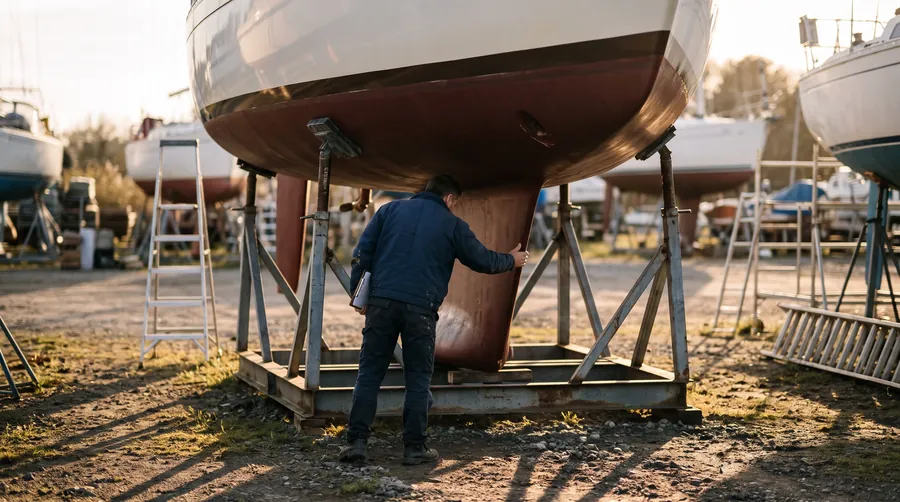
Before the first screw is loosened, the boat needs an honest look. André Vrecer is a technical boat surveyor. He prepares pre-purchase and valuation surveys as well as damage surveys and supports owners in settling claims. For valuations, the yard follows the guidelines of DESAG. Such a survey answers the question on which every refit decision depends: what is the boat worth today, and what does it need to be a pleasure again? An up-to-date valuation also sets a traceable insured value. After damage, the damage survey records what has been damaged and what needs to be done.
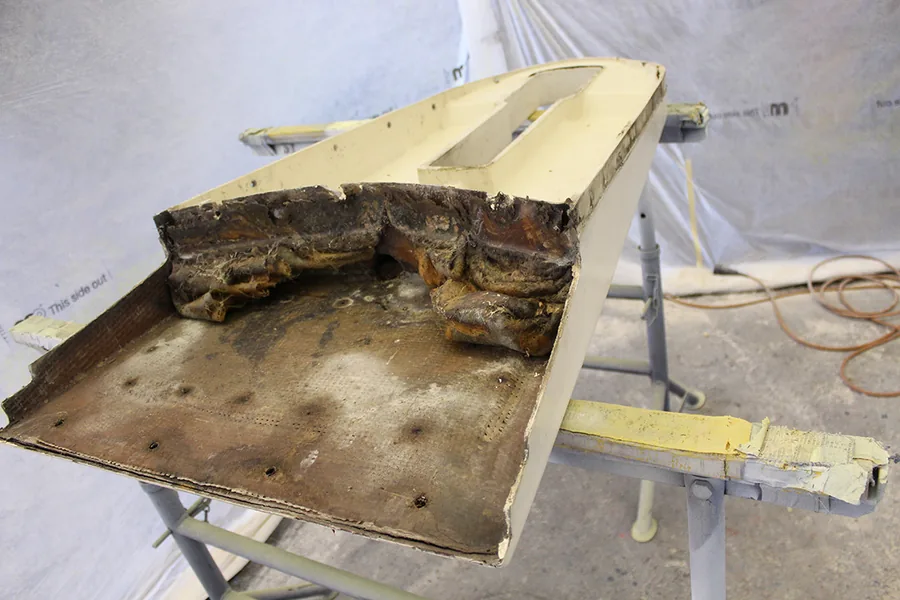
Partial renovation or complete overhaul
Not every boat needs everything. Werft 52 distinguishes between a partial renovation, limited to individual areas such as the electrics, and a complete overhaul. For the calculation, this is the most important switch. A partial renovation fixes exactly what bothers the owner and leaves the rest as it is. A complete overhaul turns a tired boat back into one where hardly anything stays old, very much in the spirit of the classic car comparison. The survey shows which option pays off, and it depends on how long the owner wants to keep using the boat. The same logic applies as with any larger spending on a boat: the longer the planned holding period, the more likely a bigger intervention pays for itself.
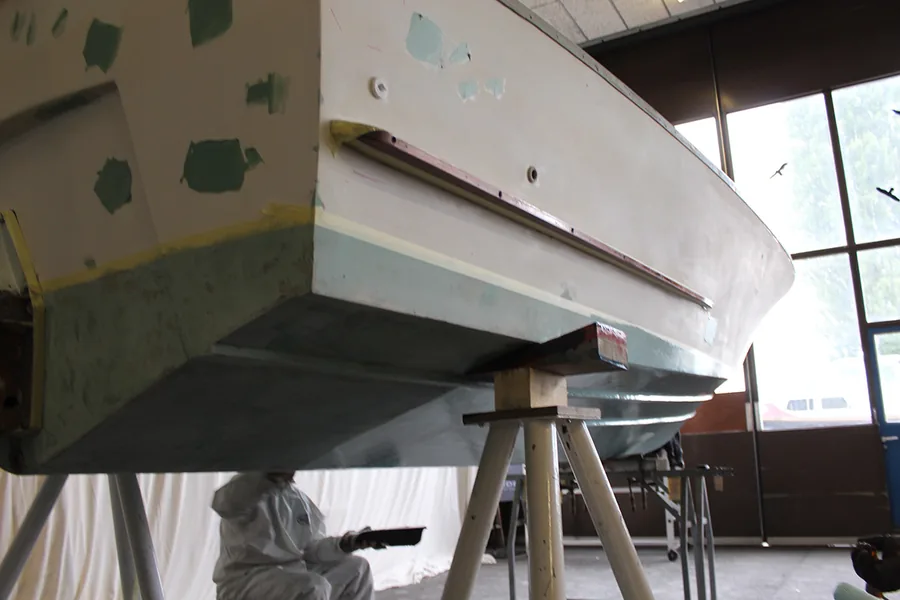
Steel, GRP and wood
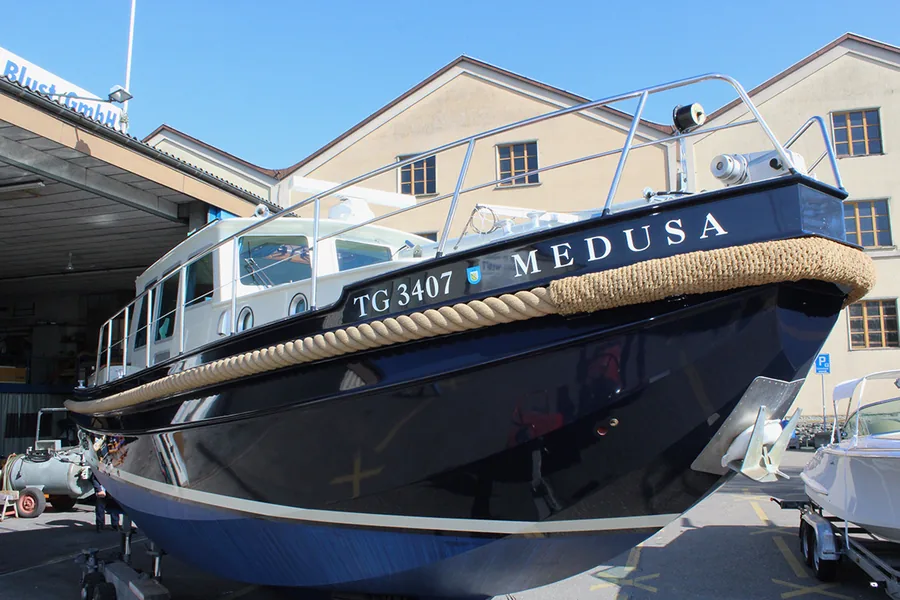
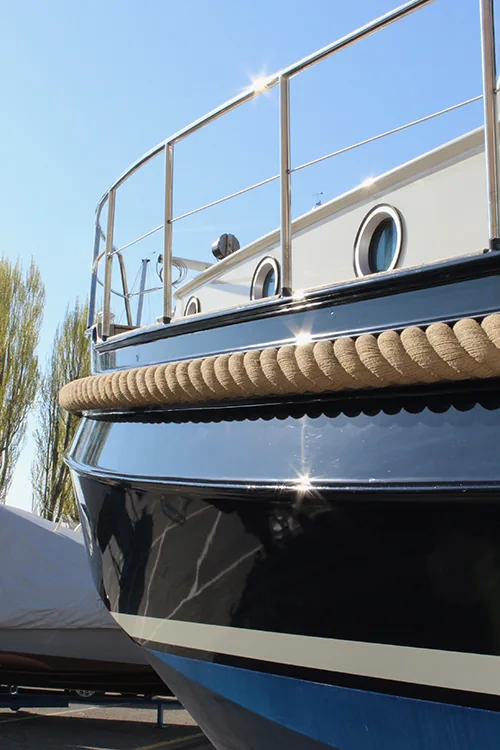
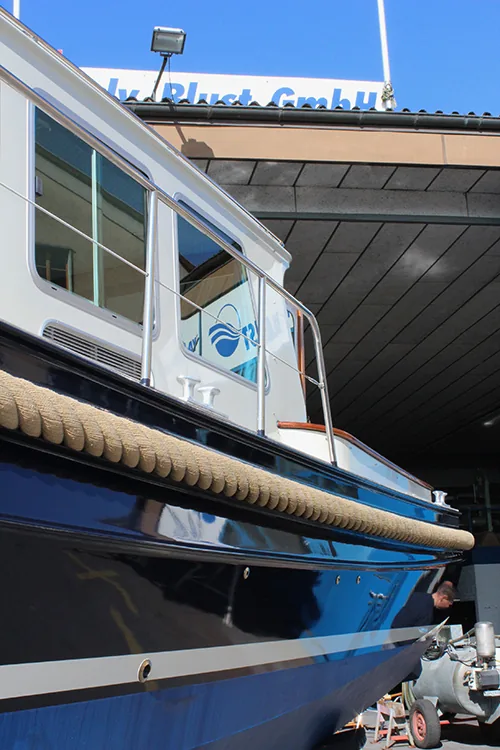
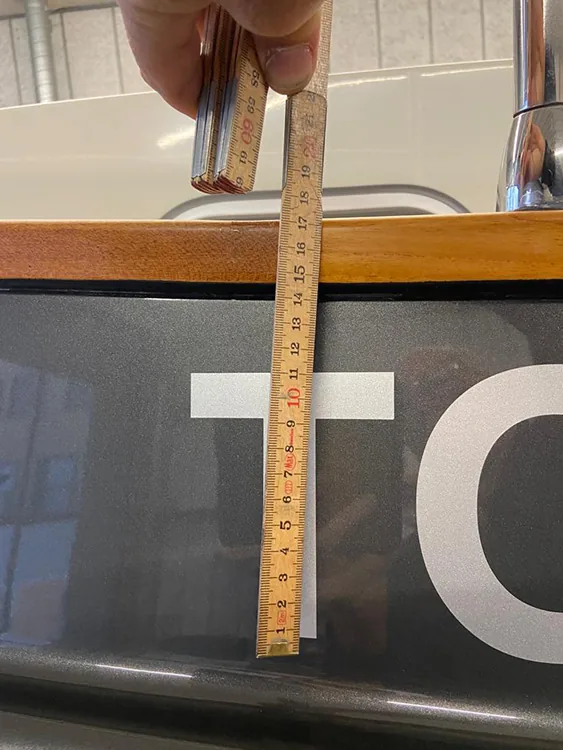
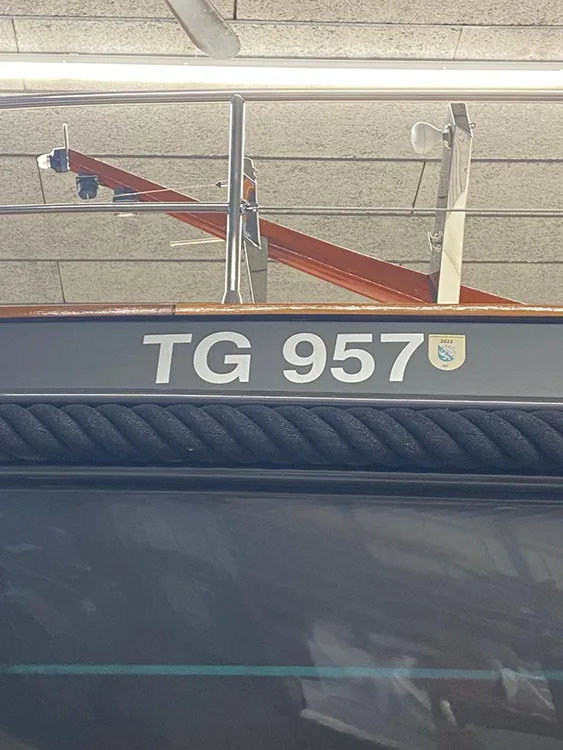
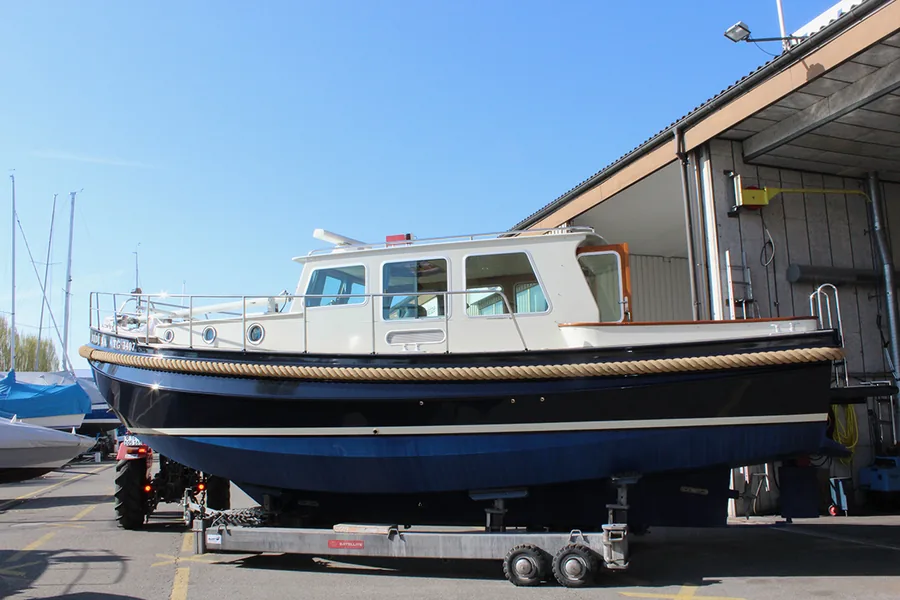
Werft 52 carries out refit work in steel, GRP (fibreglass) and wood. Each material calls for its own craft, and the hands for it are on site: the yard’s own boatbuilder and its own boat painter. The pictures in this article show what the result can look like on a steel boat, with a high-gloss hull and a rope fender. A technical upgrade can also include a new drive. The yard is a dealer for ePropulsion and Mercury Avator and handles conversions, retrofits and servicing of electric drives.
Winter storage as workshop time
The best time for a refit is when the boat is not being used anyway. More than 185 boats are currently in winter storage at Werft 52. In Romanshorn there is a heated workshop of 350 square metres and a covered winter storage hall of 1,500 square metres, in Kreuzlingen 450 square metres of workshop, a hall of 1,350 square metres and 4,000 square metres of outdoor storage. A crane lifts boats of up to 20 tonnes, and service technicians look after engines from Mercruiser, Mercury, Volvo Penta, Steyr and Nanni. For owners this has a simple financial advantage: the boat is ashore anyway, so the work costs no days of the season. Owners who agree their wishes with the yard early take the boat out of the hall renewed in spring.
When a refit pays off
A refit pays off above all when three things come together: a boat whose substance the survey confirms, an owner who wants to keep using it for a long time, and wishes that can be put into practice in a targeted way. The money then goes into improvements you can feel on board instead of into the depreciation of a new boat. On its website, Werft 52 lists over 15 refit projects and over 8 restorations. Anyone who decides to buy new after all can trade in their current boat when buying a new one through Werft 52. For both routes, the survey is the right first step.
Frequently asked questions
What is a yacht refit?
The renovation of a yacht according to its owner’s wishes. It can be a partial renovation that only concerns the electrics, for example, or a complete overhaul, from a technical upgrade to aesthetic refinement.
Is a refit worth it instead of buying new?
That depends on the condition of the boat, the scope of the work and the planned holding period. According to market observations, a new boat loses around 20 percent of its value in the first year, while a refit goes into a boat that has already left this part of the value curve behind. A survey before the decision brings clarity.
When is the best time for a refit?
The months in winter storage, when the boat is ashore anyway. At Werft 52 on Lake Constance, the yard’s own boatbuilder and boat painter work on site, where more than 185 boats are currently stored for the winter.
Share